Whale watching season in Gold Coast | Migration months explained

Sure, Sydney gets a lot of attention but if you really want front-row seats to the humpback migration, the Gold Coast might just be the better pick. Why? The whales pass incredibly close to shore here, the water's usually calmer, and the viewing hit rate is seriously high. Plus, with multiple departures from Main Beach and Marina Mirage, it’s one of the easiest places to hop on a cruise and be spotting whales within minutes. In this guide, we’ll break down the Gold Coast whale watching season, including when it begins, what to expect, and the best time to go.

When does whale watching season start and end on the Gold Coast?

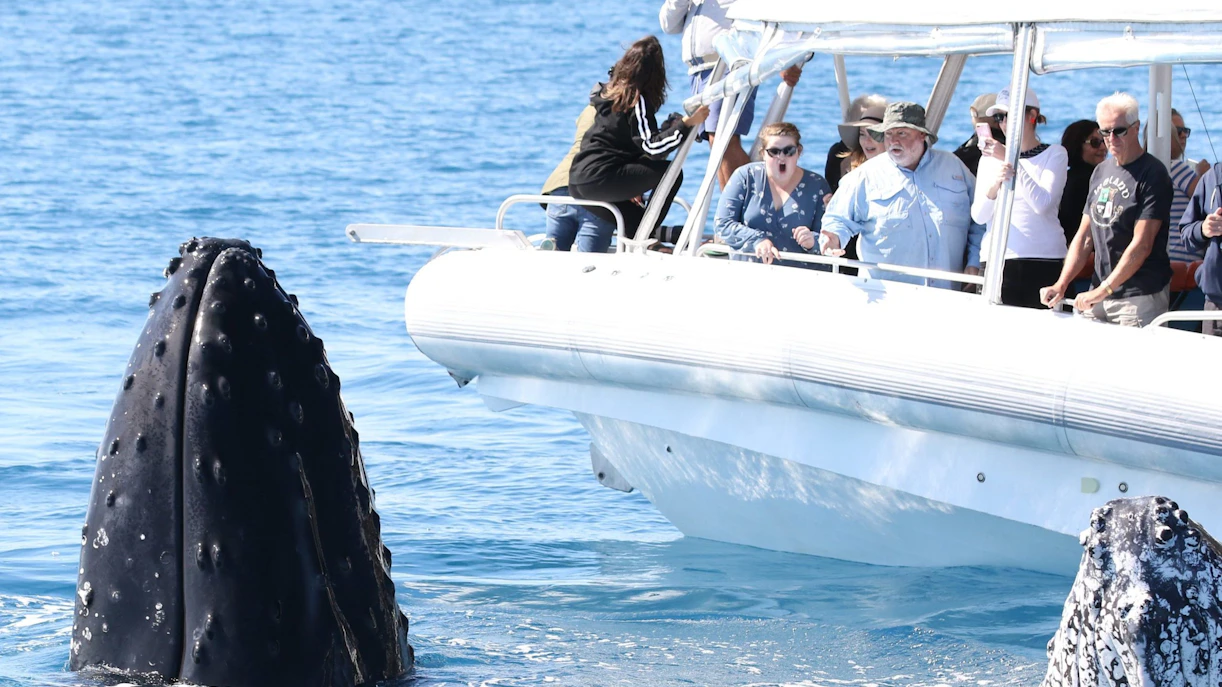
Tourists on a boat watch two humpback whales surface in Hervey Bay.

The Gold Coast whale watching season typically begins around late May to early June and runs through to early November. This timeframe aligns with the great humpback whale migration which is one of the most spectacular wildlife events on the planet.

Each year, tens of thousands of humpbacks travel north from the icy waters of Antarctica to the warmer breeding grounds along Queensland’s coast. The first whales tend to pass by the Gold Coast in early June during their northbound journey. These early sightings often feature adult males and pregnant females heading to give birth near the Great Barrier Reef. On this leg of the journey, whales move fast and sightings are more directional.

August is when the whales return south with their calves. The spring leg of the migration is slower and more surface-active. Mothers guide their newborns close to shore, and that’s when you’ll likely witness playful breaches, pectoral slaps, and tender moments between cow and calf.
Best time to see whales on the Gold Coast

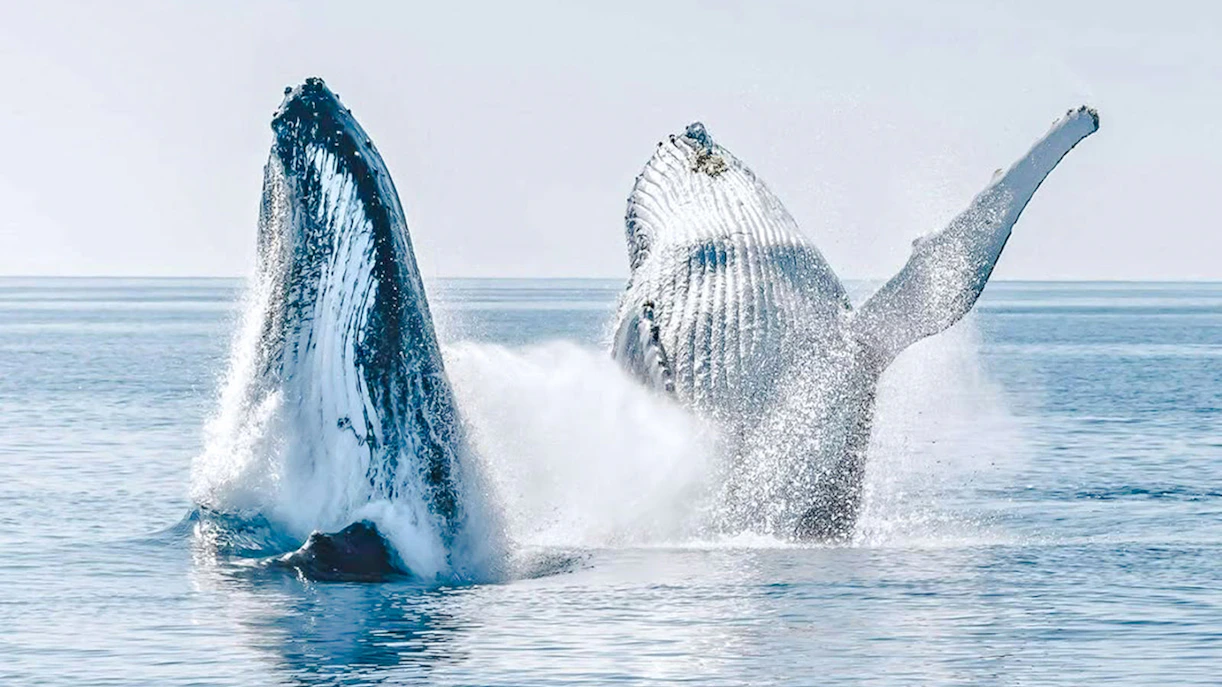
Two humpback whales breaching from the ocean during a Hervey Bay whale watching tour.
  • What you'll see: Adult whales and pregnant females heading north to breed. Expect fast-moving pods, powerful breaches, and directional passing within a few kilometers of shore.
  • Why June–July is great: Cooler winter mornings mean calmer seas and clearer conditions, making early cruises especially pleasant.
  • Crowds & atmosphere: Lighter crowds before school holidays hit. It’s ideal for quieter trips and more intimate experiences.
  • When not to go: Late May can be hit-or-miss. Sightings are possible but fewer whales are around.
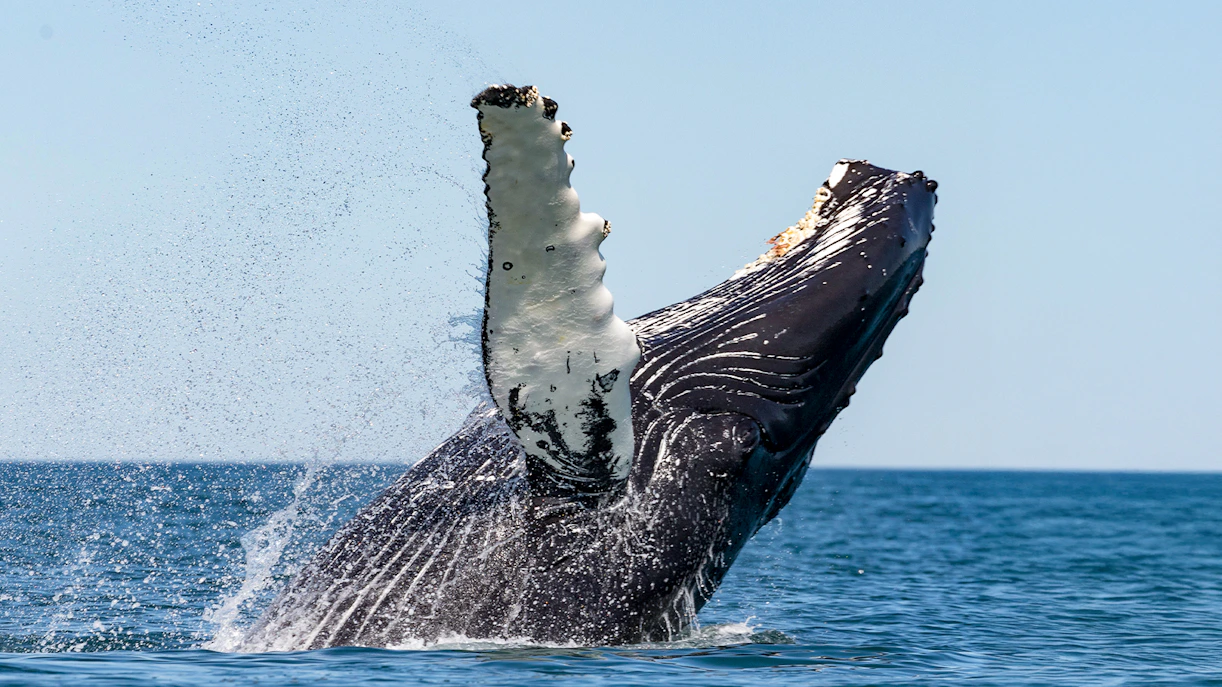
Humpback whale breaching during Gentle Giants Whale Watching Tour in Husavik.
  • What you'll see: Mothers and calves returning south; slower-moving groups, playful breaches, pectoral waves, and calf-mother interactions.
  • Why August–September is great: These months are considered the peak season. You’ll get the highest whale counts around this time. Go for morning cruises to enjoy clear skies, stable ocean conditions, and longer whale encounters thanks to the slower pace of the migrating pods.
  • Family-friendly timing: With spring school holidays falling in late September and early October, this period is also ideal for families.
  • When to skip: By November, most whales have headed south. You’ll get fewer sightings despite pleasant weather.

Best land‑based whale watching spots on the Gold Coast

Placeholder Image Headout Blimp

Burleigh Headland & Tumgun Lookout

Perched atop Burleigh Heads National Park, this viewpoint offers expansive views straight down the Humpback Highway. A short walk from town, it’s perfect for mid‑season sightings.

Placeholder Image Headout Blimp

Frequently asked questions about whale watching Gold Coast season

The season typically runs from early June to early November. Northbound migration peaks in June–July, while the return journey south, often with calves, is best seen from August to October.